The curse lead tablet found by Frankie Snyder of Scott Stripling's archaeological team confirms precisely the biblical report that curses were made on Mt. Ebal, where the Joshua's altar was built.
Lead was transported to Israel from Tarshish (southwest Sardinia at Iglesiente) and few from southern France and Iberia via the Great Sea of Mediterranean. And some of the lead ingots were sunk in the seashore of Israel (K'far Samir North & South, Hishuley Carmel, Hahotrim, and southern anchorage of Caesarea) during the Late Bronze Age Collapse. Moses knew about this famous sinking in the Mediterranean mighty water that he even alluded it after their passage from the yam suph, saying:
"Thou didst blow with thy wind, the sea covered them: they sank as lead in the mighty waters." -Exodus 15:10
The sinking of a medium-sized ship in Hishuley Carmel coast was just recently before the exodus of Israel in 1228 BCE. The ship had brought the lead ingots from Tarshish (Tursha/Atlas) before collecting copper in Cyprus and then destroyed by a storm in the Carmel coast.
Business seller inscribed the lead ingots with Crypto-Minoan markings, and these serve as evidence that lead was indeed feasible for writing. Sailors of Akko and Neve Yam were trading with the loaf-shape copper ingot from Arabah mines, giving us insight that men in Negeb and nearby were connected to some sailors of Dor and Akko (which later became haven for Asherites, the ancestors of Phoenicians). Lead originated from Greece was discovered in the Late Bronze Age and Iron Age I (1200 BCE) sites near the shore of Dor and Akko.

The lead tablet used by the people of YHW (Yahweh) or God Yahu is likely from Greek Aegean source. One of the countries there was Parista, a member of confederation of Assuwa that was the etymon of the people's name Parusata or Palastu, which in Hebrew form is Philistim (Philistines). According to prophet Amos, during Israelite exodus, Philistines from Caphtor (Enkomi, Cyprus) were freed by YHWH, most likely by the active participation of Moses.
"Are ye not as sons of the Kushiyim [Kushites] unto me, O sons of Israel? says YHWH. Have not I brought up Israel out of the land of Egypt? and the Philistines from Caphtor, and Aram from Kir?" -Amos 9:7
Moses gave permission these Caphtorims to dwel in Gaza, and asked Israelites not to harm them, contrary to what king Rameses II (1279-1213 BCE) was doing against Caphtorites.

"And when you come nigh over against the children of Ammon, distress them not, nor meddle with them: ...
... even unto Gazah, the Caphtorims, who came forth out of Caphtor, ..." -Deuteronomy 2:19,23
According to Ipuwer, a 19th Egyptian dynasty (1292-1189 BCE) scribe, Egyptians could hardly sail to Byblos and Caphtor, obviously because Caphtorites became an ally of Yah-Moses (Kush-Meshusha).

Wenamun tightened this report because Egyptian representative was madly rejected in Byblos and Alashiya (Cypus) even after more than a century. This started around 1225 BCE in Alashiya in Cyprus island when people there hacked the country's ships and later used them against king Suppiluliuma II between around 1208 and 1205 BCE.
“The ships of Alašiya met me in the sea three times for battle, and I smote them; and I seized the ships and set fire to them in the sea.
But when I arrived on dry land(?), the enemies from Alašiya came in multitude against me for battle. I [fought] them…” - Suppiluliuma II, KBo XII 38 (trans. Güterbock 1967:78)
Suppiluliuma was suspecting Shakalayu (Shakarus/Issacharites of Hazor region) because of their habit of dwelling on ships. Deborah revealed that it was the men of Asher who remain on shores overseas and the men of Dan who dwell in ships, which in 1210-1209 BCE identified by king Merneptah and in 1170's BCE by Ramesses III with the name "circumcised Akwesha" and "Denyen," respectively, and who in 1208 BCE help their relatives in Sidon to found Tyre in the midst of the sea.

King Suppiluliuma II, Moses, Wenamun, and prophet Amos corroborated the report of Ipuwer about Caphtor and Byblos.
This is an opposite situation during the time of Thutmose and Amenhotep II, when Egyptians were subduing Byblos and Cyprus.
In fact, Amenhotep II reported that his military official, Usersatet, is "master of a wife from Babylon and a maidservant from Byblos, a young girl from Alalakh and an old woman from Arapkha. Now, these people from Tekshi (Takhas, Syria) are worthless--what are they good for? "
Needless to say the Israelite exodus being mentioned by prophet Amos and Moses was not in the days of Thutmose or Amenhotep II.
The 40 years of Exodus ended up in 1189 BCE when Moses and then female pharaoh Tausert died. Before this death, Queen Tausert, either personally or by a representative, had visited the headquarters of Balaam in Deir 'Alla, where she gave a faience vase (inscribed with her name) as a gift, and after of which Moses ordered Israelites, mixed with hornet division (amalgamated with Caphtorims or Philistines), to kill the 5 Moabite Midianite king-clients of Sihon, including Balaam (Numbers 31:8, Joshua 13:21-22). This could be the reason why the family of Jethro, Moses' father-in-law, dissociated their identity from Midianites and renamed Jethro (Regeuel) from having the surname "the Midianite" into "Kenite," and his family into "Kenites" (Judges 1:16 & 4:11), although Egyptian army scribe Hori (fl.1240- c.1170 BCE), when discussing about king Rameses II's reign, claimed that it was difficult to distunguish a Kenite from Shasu, and challenged Amenemope to...
"Come let me tell thee of other towns, which are above them. Thou hast not gone to the land of Tahath, Khemarim, Timnah, Kadesh, Deper, Adah, Horonem. Thou hast not beheld Kirjath-anab and Beth-Tophel. Thou dost not know Adoraim, nor yet Dizahab... Pray teach me concerning the appearance of
Kenite;
acquaint me with Ruhayba; explain Bethezel... The stream of Jordan, how is it crossed?... Thou makest the name of every Maher, officers of the land of Egypt. Thy name becomes like that of Kazardi, the chief of Asshurites, when the hyena found him in the balsam-tree.
The narrow defile is infested with
Shasu
concealed beneath the bushes; some of them are of 4 cubits or of
around 9 feet,
from their noses to feet, fierce of face, their heart is not mild, and they hearken not to coaxing." - Papyrus Anastasi I, 20-23 (Satirical Letter)

Not only that Shasu were difficult to be distinguished from other clans, there were also of a clan that were giants, known in the Bible as Sheshai of Arba, identified by king Rameses II as "sh-sw w-r-b-r" (Shasu of Arbar).
According to Hori, these Shasu living between Debir and Joffa were 7 to less than 9 feet tall and were fearful in appearance.
Joshua identified them as Sheshai of Arba.
"... the name of Hebron before was city of Arba: and they slew
Sheshai,
and Ahiman, and Talmai.
And the children of the Kenite, Moses' father in law, went up out of the city of palm trees with the children of Judah into the wilderness of Judah,... in the south of Arad; ...and dwelt among the people." - Judges 1:10,16
The reason why the 10 "scouts" were afraid & had discouraged Israel, and why Moses ordered them to stay 40 years in the wilderness, were the giant Sheshai of Arba.
Egyptian army scribe Hori gives the time of existence of taller "Shasu" (of Arbar), and it was during the reign of king Rameses II (c.1230 BCE).
The 1st plan was to make Hobab the Kenite as the scout; but Miriam made a controversy against Kushite. This ended up in chosing princes from 12 tribes of Israel.
"These are the names of the men which Moses sent to spy out the land...So they went up, and searched the land from the wilderness of Zin unto Rehob, as men come to Hamath. And they ascended by Negeb, and came unto Hebron; where Ahiman,
Sheshai,
and Talmai, the children of Anak, were...
And they returned... after 40 days.
And they brought up an evil report of the land... saying, The land... is a land that eats up the inhabitants thereof; and all the people that we saw in it are men of a
great stature."
- Numbers 13:16,21-22,25,32

Therefore, Joshua and company were real people living in real world during Rameses II's days, as the pharaoh himself made a pictorial description of these giant Shasu in his Kadesh Battle inscription.
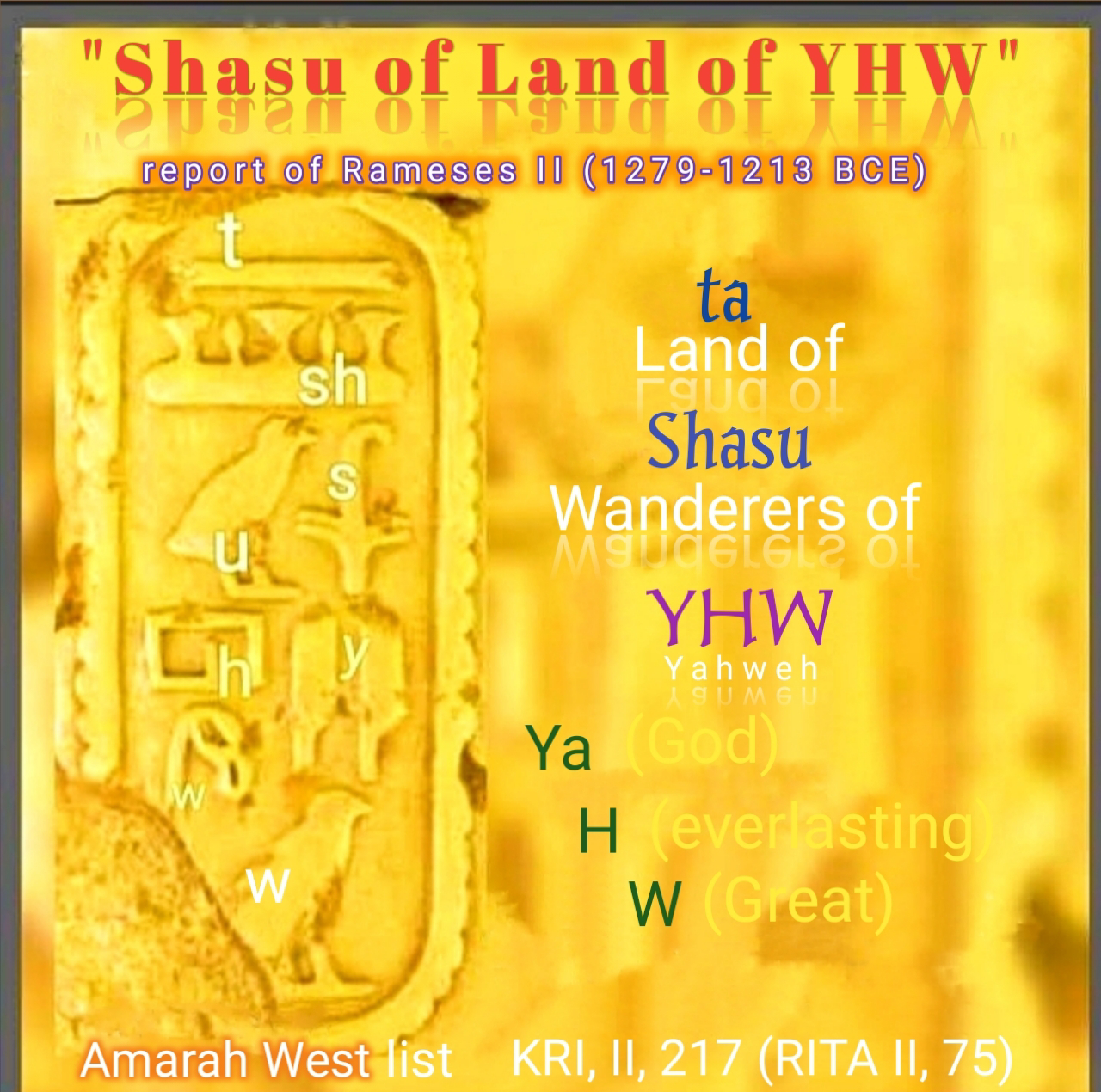
Another clan of Shasu was of those living in and around Makhtesh Ramon, the area identified by king Rameses II as Land of Yahweh.

Indeed, Shasu in the Land of Yahweh are indistinguishable, too, from the Shasu tribes of Edom and of Seir. King Rameses II (1279-1213) locates the Land of Yahweh of the Shasu in Makhtesh Ramon, south of Athar according to king Rameses III (1186-1155 BCE).
King Merneptah, the successor of Rameses, describes that vagabond men and women of Israel was near Kharu (Horite state in Seir), which is in the border of Egypt and Edom. Before Moses' death (1189 BCE), it is reported that 10,000s of Kodesh of Seir were converted to the faith of YHWH, and they recognized Moses as their king. Rameses III confirmed it by reporting that Yar-su (derogatoric name of Yar-mesu, "Drawn from River Water," shortened into "Moseh" or "Moses") was the
"ur " ("wer"),
meaning "Great imperial leader" of Kharu (Horite state in Seir). Yar-su (Yar-mesu) and Queen Tausert died in 1189 BCE, his death and the departure of Joshua's troops from Negeb triggered king Rameses III to annihilate Seirites, another clan of Shasu.
On the other hand, Edomites where enemies of Seirites because of conquering the latter's territory, hence king Merneptah used Edomites as his messengers and were allowed to refresh from the water of the Wells of Mer-neptah.

Joshua reported that there was a Well of Mei-Nephtoah (Well of Mer-neptah) in the forest of Jearim.


With these very intricate connections of tribes or clans, Israelites had distinguished the family of Jethro as Kenites.
We can distinguish the parties as 'Moabite Midianites,' referring to their enemies, and as 'Kenite Midianites,' a tribe of the Kushite Zephorah, the wife of Moses and daughter of Jethro.
Balaam became a hired seer of Moabites, that is, in the camp of enemy. He made an astute solution to beguile Israelites.

It was this Balaam, the seer from Aram, who predicted that back up ships from Kition or Cyprus would help Israel to aid Kenites, adding to the credence of Ipuwer's and Amos' report, that Cyprus was on the side of Israel and Caphtorites were freed by YHWH during Israelite exodus (1228-1189 BCE), respectively.
Numbers 24:15-19,21-24
"And he took up his parable, and said, Balaam the son of Beor has said, and the man whose eyes are open has said:
He has said, which heard the words of God, and knew the knowledge of the Elyon [most High], who saw the vision of Shaddai [the Almighty], falling into a trance, but having his eyes open:
I shall see him, but not now: I shall behold him, but not nigh: there shall come a Star out of Jacob, and a
Sceptre shall rise out of Israel,
and shall smite the corners of Moab, and destroy all the children of Sheth.
And Edom shall be a possession, Seir also shall be a possession for his enemies; and Israel shall do valiantly. Out of Jacob shall come
he that shall have dominion,
and shall destroy him that remains of the city.
And he looked on the Kenites, and took up his parable, and said, Strong is your dwellingplace, and you put your nest in a rock. Nevertheless the Kenite shall be wasted, until Asshur shall carry thee away captive.
And he took up his parable, and said, Alas, who shall live when God does this!
And ships shall come from the coast of Chittim [Cyprus], and shall afflict Asshur, and shall afflict Eber, and he also shall perish for ever." -Numbers 24:15-19,21-24
Balaam revealed here a military secret that Asshurites, who are also mentioned by Seti I (Wadi Abbad Rock Temple, list 17.4) and Rameses II (Abydos temple, Simon's Topographical List 25.8) would afflict Kenites and capture Kenite (probably Jethro). In Onomasticon of Amenope, their area is located between Gaza and Shubaru (Shobal):
"Ashkelon, Ashdod, Gaza,
Asshur,
Shubaru, Sherden [Sered], Tjeker [Dor], Peleset [Philistia], Khurma [Hormah]." (Killebrew 2005, pp.204-205)
According to Balaam, ships from Kition (Cyprus) were the back up of Israel to afflict Asshur, who devastated the Kenites in the Negeb or Galilee. They were descendants of Abraham (Genesis 25:1-3). Their first appearance in foreign history is when king Thutmose III (1479-1425 BCE), in Great Temple of Amon at Karnak (Topographical List 4.10), mentioned them as
" iss(w)r "
or "Asshur."
Balaam reported that Asshur held captive either "the Kenite" (probably Jethro) or Israel, but ships from Kittim (Cyprus) arrived and afflicted these Asshurites.
It was very awkward that Balaam spoke against Balak ben Zippor the king of Moab who hired him and consulted ziqne ("elders" or senators) of Midian about the 4th division (the company of Israel headed by prince Zimri Ben Salu: Numbers 23:10) that was now spreading on the plain of Shittim.
This time, cursing an enemy was a practice popularized by the Hittites and spread out from Levant to Babylon by king Bentisina (c.1250 BCE) of Amorites, the ally of king Rameses II. It became the business of Balaam before his headquarters in Deir 'Alla was destroyed (1190 BCE) after pharaoh Tausert visited it.
"He sent messengers therefore unto Balaam the son of Beor to Pethor, which is by the river of the land of Bene-Ammu, to call him, saying, Behold, there is a people come out from Egypt: behold, they cover the face of the earth, and they abide over against me" -Numbers 22:5
There were two Pethors that time, the
pw-t3r
(Pethor) in the Medinet Habu Great Temple Topographical List 27.3 of king Rameses III is what king Thutmose III described as formerly a locality near Damascus (#156). Balaam called it Pethor of Aram-Naharayim or Syrian Mesopotamia (Deut. 23:4).

Why Balaam?
First he was a renown seer that time, that even Queen Tausert when became pharaoh paid her visitation in his headquarters in Deir 'Alla. Second, he could be connected with them because he could be a sibling of Bela, the first named king of Edom. King Merneptah identified Edom as a city state in 1206 BCE, whereas Moses was trying to beg from Edom's king a permission to pass on Edom's highway. In archaeology, Edom became a distinct organized group of people around 12th century BCE.
Based on the possible helical rising of a star (Sirius) alluded in Numbers 24:17 & 33:38, king Balak ben Zippor convened the "sa-re" ("elders") of Moab and Midian before July 17, 1190 BCE.
Two opposing representatives of malakh (messenger) of Elohim who had approached Balaam.
The first was of YHWH-elohay, who was against to let Balaam go with those elders and
the second was of Elohim who told him to go with the Moabite ambassadors.
"And Elohim [God] said unto Balaam, You shall
not go with them ...
And Elohim [God] came unto Balaam at night, and said unto him, If the men come to call thee, rise up, and
go with them;
but yet the word which I shall say unto thee, that shall you do.
And Balaam rose up in the morning, and saddled his donkey, and went with the princes of Moab.
And God's anger was kindled because he went: and the malakh [messenger] of YHWH stood in the way for an adversary against him..." -Numbers 22:12,20-22
Thus, Balaam was communicating to two messengers.

In his headquarters, tablet inscription #1449 reports the end of Pethor was under a killer & finisher. These could be the 2 messengers who followed Balaam. Nevertheless, one of the opposing sides had managed him to make a compromise move that would lead Israelites believe his deceitful deadly plan. Instead to follow the projected uttering curses, he satisfied the taste of the troop of Zimri in uttering blessings and favorable things for Israel, and he made it known among the 4th company (the division of Zimri ben-Salu). Many of the 4th division died of a plague probably induced by Moabite women to them. When the divisions of Moses and Joshua went to them, they discovered the problem, and killed all possible carriers, of pandemic disease that was spreading in many parts of Mediterranean during the Late Bronze Age Collapse. As per the report of Moses and Ipuwer, the pandemic or plague had started in Egypt, particularly in the capital city.

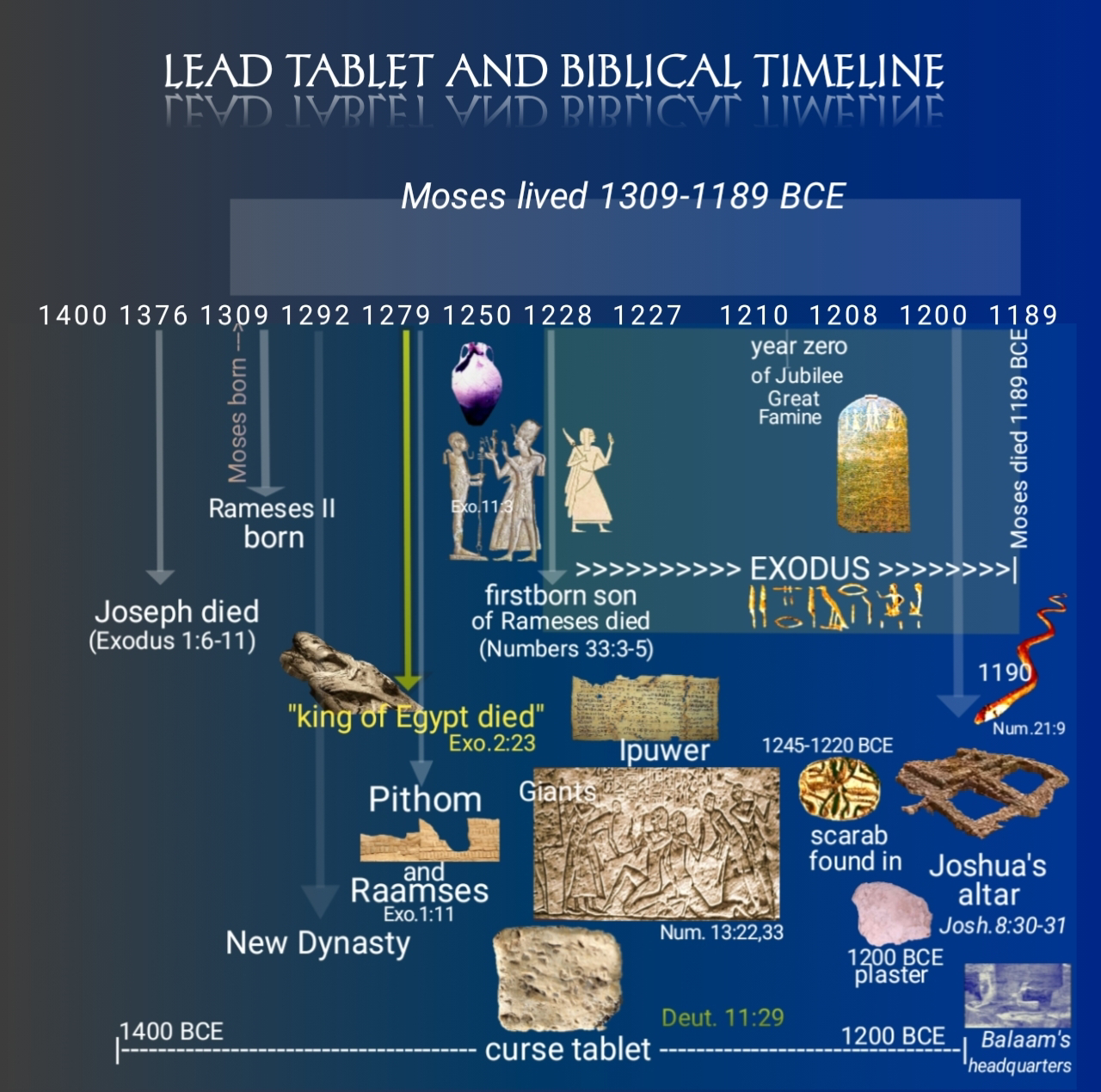
In 1279 BCE, king Seti I, the father of Rameses II, died of a hardened heart. Moses does not report what Moses' age when this happened, but biblical passage tells us that this was during the "gadal" age of Moses, particularly at his twenties. And Moses was very explicit in telling that the "king of Egypt died," and after that he used as a weapon against the successor (king Rameses) the phrase "hardened heart."

It became a double edge sword, trying to rattle the pharaoh's faith (because it was a popular teaching during Rameses II's reign that a person could not enter the peaceful afterlife if his heart is hardened or heavy). Nevertheless, Moses did not tell that the pharaoh during their exodus from Rameses died.
What he clearly reported is the death of the pharaoh's firstborn son sitting on the king's throne.
Of the royal family, only two persons explicitly reported to have died: first, the predecessor and second the firstborn son of Rameses.
After the death of the predecessor, Israel was giving a hard labor, obviously because Rameses II wanted to be remembered by great structures he could have accomplished.
"And it came to pass in process of time, that
the king of Egypt died:
and the children of Israel sighed by reason of the bondage, and they cried, and their cry came up unto God by reason of the bondage. And God heard their groaning, and God remembered his covenant with Abraham, with Isaac, and with Jacob." -Exodus 2:23-24
In the prologue of the book of Exodus (1:1-14), the pharaoh who afflicted them much was the one who built store-cities Pithom and Raamses. This pharaoh knew nothing about Joseph, who died near to his own birth year.
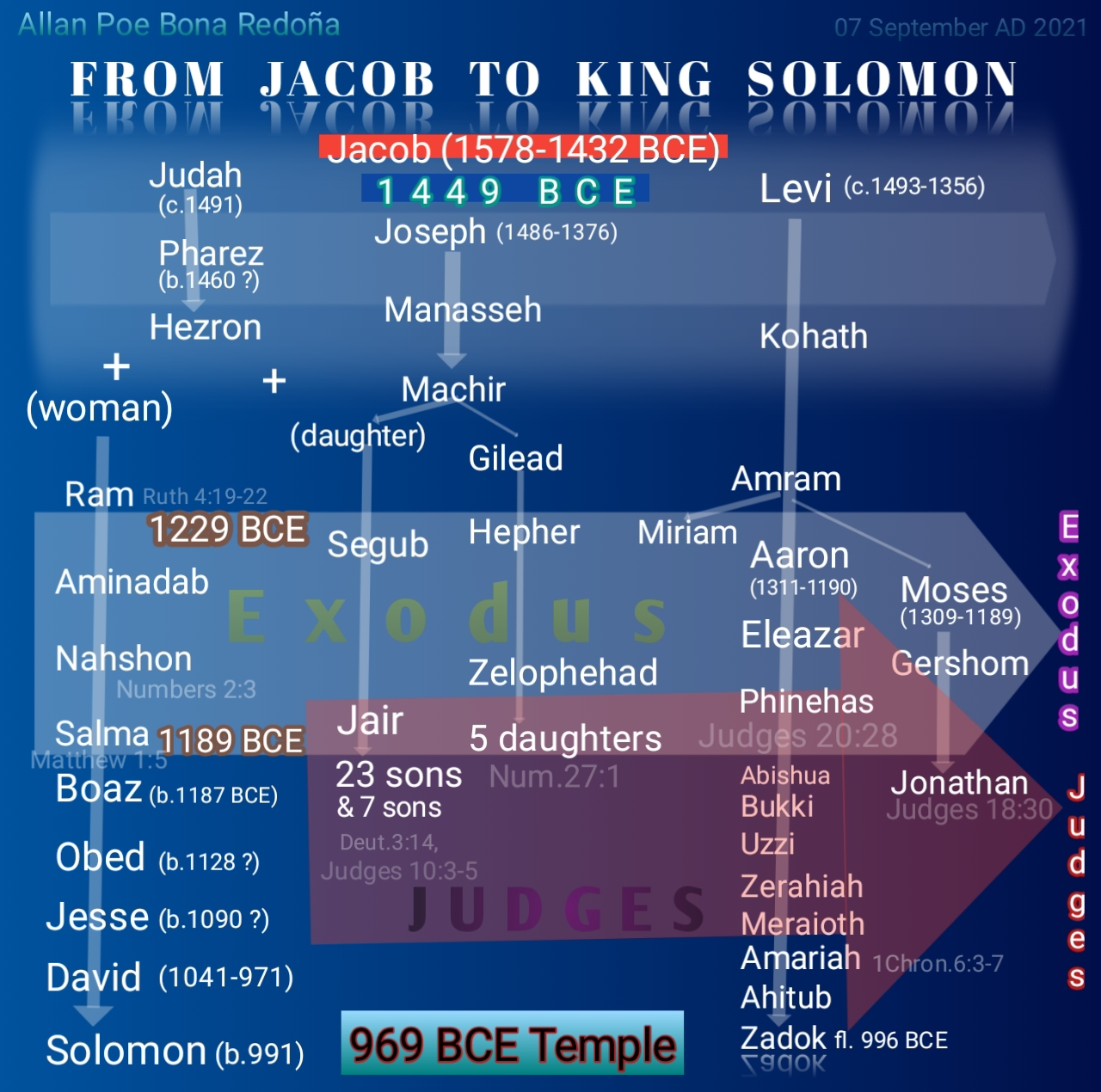
"And Joseph died, and all his brethren, and all that generation.
Now there arose up a new king over Egypt, who did not know Joseph. And he said unto his people, Behold, the people of the children of Israel are much and mightier than we: Come on, let us deal wisely with them; lest they multiply, and it come to pass, that, when there falls out any war, they join also unto our enemies, and fight against us, and so get them up out of the land.
Therefore they did set over them taskmasters to afflict them with their burdens. And they built for Pharaoh store-cities,
Pithom
and Raamses.
But the more they afflicted them, the more they multiplied and grew. And they were grieved because of the children of Israel. And the Egyptians made the children of Israel to serve with rigour: And they made their lives bitter with hard bondage, in morter, and in
brick,
and in all manner of service in the field: all their service, wherein they made them serve, was with rigour." - Exodus 1:6,8-14

The founder of Pithom was no other than but king Rameses II. He explicitly pronounced: "I built Pithom in the east."
There is no other way to say that "Pithom" here is not Pithom because it is conspicuous that Moses is referring to king Rameses the Great when his writings say that the pharaoh built Pithom and Raamses, and not just cities but "store-cities."
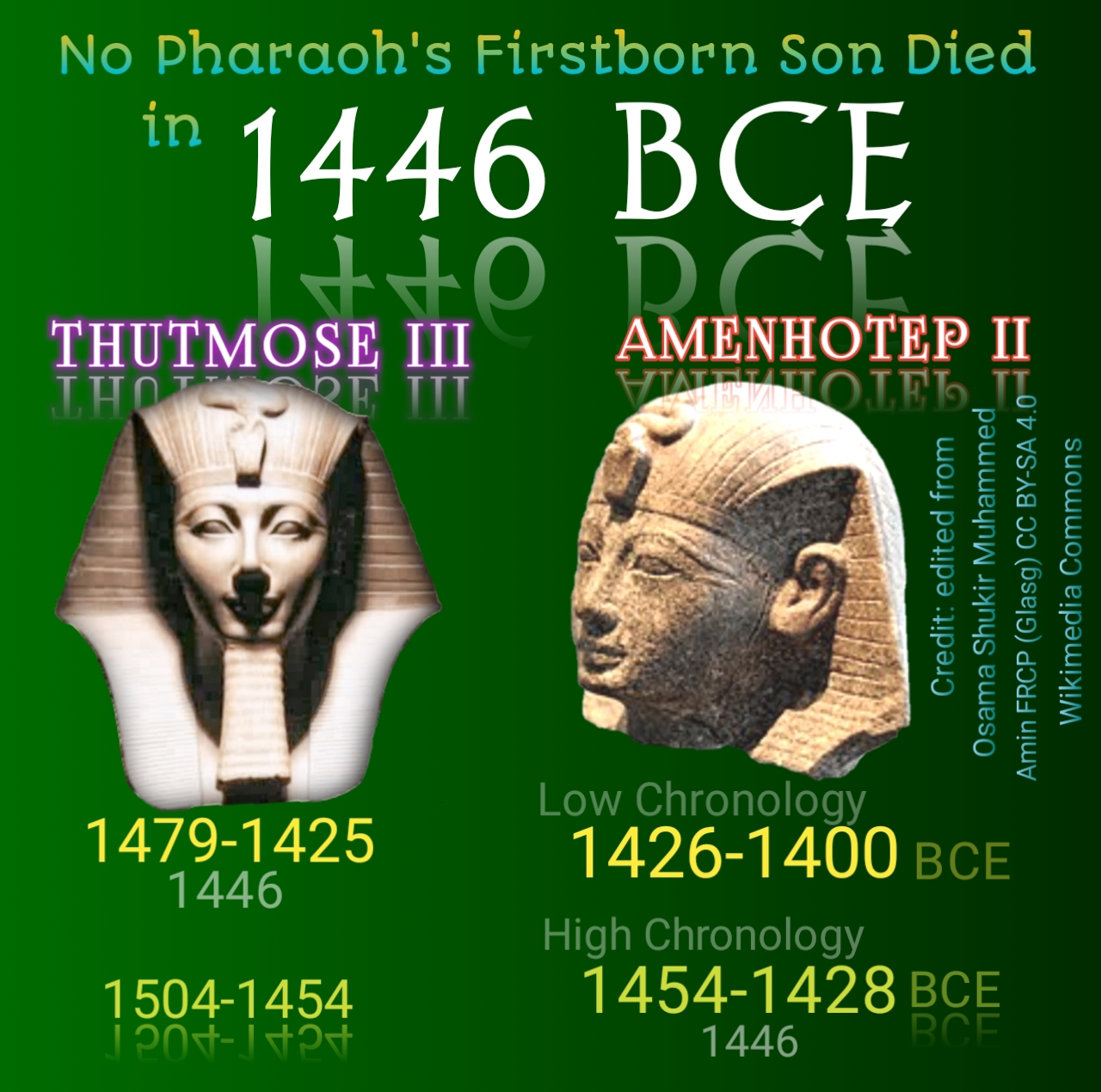
Modern thinkers rejecting "Raamses," claim that it must be "Avaris," so that king Thutmose III or Amenhotep II built as store-cities Avaris and Pithom 40 years or eighty years before the presumed 1446 BCE exodus, making him the pharaoh in 1486 or his predecessor in 1526 BCE. The only problem of this feeling-based belief is the fact that it was not Thutmose or Amenhotep II who built Avaris and Pithom, because Avaris was founded by Amenemhat I (1991-1962 BCE) when there was not a single Israelite in existence, and later it was usurped by the Hyksos. The Hyksos who re-founded Avaris was not an Egyptian pharaoh Thutmose or Amenhotep II, so it is a blatant error to coerce Avaris as founded by an Egyptian pharaoh in 1486 or 1526 BCE. Neither Pithom was founded or built by either of the said pharaoh. Pithom or temple of Atum (Amutu/Adamu) was built by king Rameses II (1279-1213 BCE) because a clan of Apiru (Hapiru/Habiru) called Hebrews in the Bible, was associated with the god Atum, the Egyptianized deified Adam (feminized Adamma in Ebla). Adam or Atum was the patriarch or patron god of Semitic people called Hebrews. Encyclopedia Britannica says king Rameses II was the founder of Pithom. And his successor Merneptah, renamed it "Pithom of Merneptah."
Two papyri are mentioning Apiru (Hapiru/Habiru) as slaves who drag stones and draw water to build a pylon of the temple of king Rameses II in Delta, Egypt. Scribe of king Rameses II corroborates Moses that Hebrews (a clan of Apiru) were involved in the building projects of the pharaoh in eastern part of the Nile Delta.
Amenmonē was reminded to
"Give food rations to the soldiers and the Apiru-laborers who are drawing water from the well of Pre of Rameses II, l.p.h., south of Ai-gy-ptos"
(Leiden Papyrus 349), and
"Give food rations to the people of the army and to the 'Apiru who are dragging stones for the great pylon [temple gate of Rameses the Great]" (Leiden Papyrus 348).
These 'Apiru (Habiru) were people living in various parts of Nile Delta, and Amenhotep III (1390-1351 BCE) records that his temple was filled with male and female slaves, children of the chiefs of foreign lands of the captivity. Amenhotep II (1426-1400 BCE) boasted that of 89,000 captives, 3600 were Apiru, contradicting the claim that he had freed Hebrews in 1446 BCE.
These Apiru were from the other side of the river, hence a clan from them is identified Hebrew or Ibri. Their leader in Urkesh during Zimri-Lim's reign was Terru (Terah), the father of Abram.
According to ancient document now known Archives Royales de Mari (ARM) 100:22f, Habiru were ones of the Urkash-dim (people of Urkesh) under Terru and threatened him, resulting to his escape nearer Mari. Arriuki succeeded on the throne of Urkesh, whose dominion reached to Elamarza (Elasar).
When Abram joined with the confederation of Amorite Habiru to fight the league of Amarpal (Amatpiel), he was surnamed "the Hebrew."
Biblically speaking, the term "Hebrew" (Ibri) is derived from the patriarch Eber (fl. 1962-1865 BCE) and it is also derived from the surname which Abram had gotten in joining with the Amorite Habiru. It was Rib-Hadda of Byblos who first notified that the son of Abdi-Ashirta of Amurru (modern Lebanon) became an ʿApiru. The presence of Apiru in Shechem was because Labayu gave Shechem as their dwelling place after they won on the battle in Megiddo.
Majority of the 438 Habiru soldiers/servants of king Tunip-Tessup of Tikunani (c.1550 BCE) are typically of Hurrians, the rest are of Semitic, and one of a Kassite (Kushite of Mesopotamia).
This may mean that Habiru or Apiru was from Hurrian word "hapiri," badly designated "SA.GAZ" in Sumerian logogram to identify Aramean nomad "trespassers." Egyptians used the root "apar" ('dusty,' dirty) for them, which turned "Apirim" in Ugarit. It was a changed from Akkadian " 'aperu " or habiru (khabiru), from the Assyrian root "eberu," which means "those who cross from the other side, nomads," the very meaning of the word "Hebrew" (Ibri).
Apiru were likely involved in the collapse of Ugarit in circa 1200 or 1191 BCE, as a half-baked cuneiform tablet mentions PRM. The Akkadian phrase "Aleppo of the SA.GAZ" is translated into Ugaritic "Aleppo of the PRM," where "PRM" means "Apirim."
King Setnakhte plays a pun of word by using a synonymous term "sty.w" (dirty) for the troops of Yar-Su (Yah-Mesu). Apar also means "dirty."
Moses called Hebrews as "mixed multitude" (Exodus 12:38), which may have included Israelites, Kenites, Kushites, Midianites, Arabians, and so on.
Needless to say, Apiru or Hebrews were slave workers when king Rameses II built many projects in Nile Delta. Moses is accurate in reporting that Hebrews were workers in building Pithom and Raamses.
There is no other pharaoh who both built Pithom and Raamses as store-cities except Rameses the Great, neither Thutmose III or Amenhotep II built those cities, nor Amenhotep II built Avaris as treasure city. Another thing, Thebes and not Avaris was the capital city of Amenhotep II.
According to Numbers 34:2-8, the report on Israelite exodus from Rameses was written of Moses. His details about the encounter of Joshua and company to the city of Nefilim (Num.13:30,33) strengthens the claim that Moses was the writer of the first edition of the book of Genesis, where in its chapter 6, verse 4 has mentioned too the predecessor Nefilim.
When did Moses write the 1st edition of Genesis? He wrote it when the toponym "Rameses" was very popular as a regional name in the eastern part of Delta. According to Moses,
"Joseph placed his father and his brothers, and gave them a possession in the land of Egypt, in the best of the land, in the land of Rameses, as Pharaoh had commanded." (Genesis 47:11)
The best land was Goshen near Heliopolis, where Joseph and wife lived, that is, in Wadi Tumilat. This gives us idea that Wadi Tumilat is part of the "land of Rameses" during Moses' days specifically mentioning it because that's the way his listeners or readers could understand its scope.
Also, Moses Hebrized king Rameses II's
"rbw" ("Libu")
as "le-ha´bim" (variant of "lubim ") in Genesis 10:13, referring to the 13th century BCE east Libyan confederacy of berbers. Why Moses was claiming that Lehabim (Libyans) were the sons or descendants of Misraim (Egypt)? The Libyans themselves claimed that they have territory in Delta, Egypt.
In 1208 BCE, king Meryey led the Great Chiefs of the Libu and an army of 40,000 to have residential territory in Delta, but king Merneptah defeated them.
According to the official report of king Merneptah (in 1208-1207 BCE), they were allies of circumcised Akwesha (Asherites), Tursha (Tarshish), Shakares (Issacharites), Sherden, and Rukka. Asherites, the ancestors of Phoenicians, were the first to have established trading posts in Libya.
This gives us insight that Libu (Libyans) themselves were claiming to be having come from the northern Egypt, so that they have the ancestral right to reclaim the land.
Adding to Moses' authorship of Genesis is his teaching:
"For in 6 days YHWH made heaven and earth, the sea, and all that in them is, and rested the 7th day: wherefore YHWH blessed the sabbath day, and hallowed it." -Exodus 20:11
The lines in Genesis 17:1, 28:3, 35:11, 43:14, 48:3, and 49:25 which express 'Shaddai," the other name of God which was popular to Temanites during Job's time, are highly likely from Moses' revelation to emphasize that it was during Moses' time when the name YHW (Yahweh) was revealed to an Israelite to be the memorial God's name as what he conveyed in Exodus 6:3 saying God was known El Shaddai to Abraham, Isaac, and Jacob but not by the name YHWH.
Knowing this, that Moses wrote the first edition, there is no hard thing for us to think that he indeed made mentioned "Rameses" in his writings, that now survived in Genesis 47:11, Exodus 12:37, Numbers 33:3 and 33:5, and in a variant form in Exodus 1:11.
Rameses was very popular as a region during Merneptah's reign that even a scribe (Papyrus Anastasi III, 3:3) identified the eastern part of Delta with that toponym. It was named after its builder, king Rameses II.
Therefore, Thutmose III or Amenhotep II has nothing to do with the building of Pithom and Raamses, rather both in the mind of Moses and in Egyptian contemporary records, it was Rameses II who built them as store-cities, locating the capital city in Rameses. It was also there in the capital city when the pharaoh set a date to commend Moses for a favor he gave to the pharaoh, and that favor accordingly was some sort of talking (Moses probably talk to a God favorable for the pharaoh), and the king asked the army to imitate Moses. This is officially recorded on the document now known "Stele of Mose" or "Stela Hildesheim 374." Moses has his own version of this incident.
"Speak now in the ears of the people, and let every man borrow of his neighbour, and every woman of her neighbour, jewels of
silver,
and jewels of gold. And YHWH gave the people favour in the sight of the Egyptians. Moreover the
man Moses
was very great in the land of Egypt, in the sight of Pharaoh's servants, and in the sight of the people. And Moses said, Thus says YHWH, About midnight will I go out into the midst of Egypt: And all the firstborn in the land of Egypt shall die, from the pharaoh's firstborn sitting upon his throne, even unto the firstborn of the maidservant that is behind the mill; and all the firstborn of animals. And there shall be a great cry throughout all the land of Egypt, such as there was none like it, nor shall be like it any more." -Exodus 11:2-6

This paragraph is verified or corroborated in the 13th century BCE when Rameses commissioned a very skilled inscriber to record the event in a stele, which is 2 feet & 2.6 inches in height (telling that pharaoh Rameses gives silver and gifts from palace, that his servants celebrated Moses) and when he ordered to build the ever largest tomb in Egypt. No one of all his firstborn sons succeeded him as they died before he died. It was his 13th son, Merneptah, the maker of the Well of Me-Nephtoah, who finally and successfully took his throne. An oracle was delivered by Moses that...
"All the firstborn in the land of Egypt shall die, from the Pharaoh's
firstborn who sits upon his throne,
even unto the firstborn of the maidservant that is behind the mill; and all the firstborn of animals." -Exodus 11:5
In effect, it became a curse because after the second firstborn son's death, no other firstborn son of king Rameses II succeeded him, although the death of the eldest firstborn son might have given the pharaoh the feeling of doubt (e.g. Moses was just guessing, knowing that the first firstborn son died prior to the second one). Moses is devaluing the status of Egyptian gods into human status, by saying that YHWY judged all the said gods when the firstborn crown prince died, suggesting that the first god to be affected was the pharaoh himself.

"For I will pass through the land of Egypt this night, and will smite all the firstborn in the land of Egypt, both man and animal; and against all the gods of Egypt I will execute judgment: I am YHWH." -Exodus 12:12
One of the Egyptian gods to be mostly affected was the pharaoh himself.
"And Moses wrote the exodus of their journeys by the commandment of YHWH: and these are their journeys according to their exits: They departed from
Rameses
on the 15th day of the 1st month; on the day after the passover the children of Israel went out with an high hand in the sight of all the Egyptians. For the Egyptians buried all their firstborn, which YHWH had smitten among them: upon their
gods
also YHWH executed judgments. And the descendants of Israel left Rameses, and camped at Succoth." -Numbers 33:2-5
If the pharaoh was one of the Egyptian gods, then it may imply that he had his 30 years or so in serving on the throne, because to become a state god, the pharaoh must have had his heb sed (jubilee festival), which was traditionally to be celebrated in the 30th regnal year, and then every succeeding 3rd year after that. This also explains why the "firstborn son" of Rameses was sitting on the pharaoh's throne, because the firstborn crown prince could function as a pharaoh if his father is fulfilling the function as a ritual god, and king Rameses II took this opportunity to explicitly project his status as a god. And the firstborn son when he became a state god in circa 1249 BCE was Ramesses B junior, who held the position "crown prince" from 1254 to 1228 BCE.

Rameses II the Great made conspicuous his intention to become a state god as he was preparing it as early as 1264 BCE when he built his statues and temple for him as one of the Egyptian gods.
Ipuwer, an Egyptian scribe in the 19th dynasty (1292-1189 BCE), suggests that during the senile age of the strong man of the land, pharaoh neglected the catastrophic events that were devastating the lives, moral, integrity, and livelihood of Egyptians, and king Ramesses III corroborated it that it happened during the reign of king Rameses II. This disaster caused by Yar-su (Yah-Moses) culminated just the year Queen Tausert died (1189 BCE).
When Queen Tausert became "king of Egypt" in 1191 BCE she made more security for the throne by her alliance with Akko, which is connected to the copper industry in Arabah and sooner became haven of the troops of the Asherites, the ancestors of the Phoenicians. She also had a relation to the Sidonians, whose land was penetrated by merchant Danites. She became busy in securing the copper mining sites, in Athika (Timna Valley) Edom and in Deir 'Alla. Her representative visited the headquarters of Balaam the son of Beor in Deir 'Alla around 1190 BCE with gifts from her. However, according to Ramesses III (1186-1155 BCE) she conspired with Yar-su (Yar-mesu), resulting to emptying Egypt, depleting copper because the troop of Moses used the metal for military arms. Manetho reported that Moses with Kenite Midianite men were in mining sites, and the Bible says it was in Edom.

Archaeological findings discovered that Kenite Midianites destroyed the images of Egyptian goddess Hathor and shrine in Athika (Timna Valley, Edom) before king Rameses III (1186-1155 BCE) discovered the mine.
As early as 1194 BCE Queen Tausert was relieved of a possible death because of a treason when her son (then the pharaoh) ordered to execute Chancellor, who was in a good relationship with the king of Ugarit. This may imply that probably she was also against Ugarit when Moses' troops caused havoc in Syria. And with this Moses was treated by Jeshurun (Asherites and peoples of the confederation) as a king, leading the Kharu (Horite state of Seir).
"And he said, YHWH
בָּא֙
[bā]
went in
from Sinai, and dawned from Seir unto them; He shone forth from mount Paran, and arrived with 10,000s Kodesh: from His right hand went a fiery decree for them.
Moses commanded us a law, even the inheritance of the congregation of Jacob. And he was in
בִישֻׁר֖וּן
(bi-Shurun)
king,
when the heads of the people and the tribes of Israel were gathered together.
And this is the blessing of Judah: and he said, Hear, YHWH, the voice of Judah, and bring him unto his people: let his hands be sufficient for him; and be you an help to him from his enemies.
And of Asher he said, Most blessed of sons shall be Asher; let him be acceptable to his brethren, and let him dip his foot in oil. Your sandals shall be iron and brass; and as your days, so shall your strength be. There is none like unto the God of
יְשֻׁר֑וּן
Jeshurun,
who rides upon the heaven in your help, and in his excellency on the sky." -Deuteronomy 33:2,4-5,7,24-26
Before 1189 BCE, 10,000s Kodesh (men of Kadesh) in Seir were converted to YHWH, and it was when a natural decree erupted fire from the mountain south of Sinai (Makhtesh Ramon). Natural law is described in Jeremiah 5:22.
It was in 1189 BCE when Moses gave the command that when
" it shall come to pass, when YHWH your God has brought you in unto the land whither you go to possess it, that you shall put the blessing upon mount Gerizim, and the curse upon mount Ebal." -Deuteronomy 11:29
This was not just a story or fabricated myth, because indeed the actual evidence of curse tablet was found in the soil taken from the Joshua's altar in Mt. Ebal. Not just curse tablet, rather it is an inscription addressed to the people of God whose name is YHW (Yahweh), and whose people used kosher sacrificial animals, and who existed during the days of king Rameses II (1279-1213) and Ramesses III)1186-1155 BCE).

The Joshua's altar was discovered by an atheist archaeologist who did not believe in the Bible as an accurate source of ancient history; a very rare and awkward situation. The God Yahweh used an unbeliever so that no one will question the validity of the discovery, and based on pottery he dated its lower circular shrine in 1250 BCE, and its upper rectangular altar in circa 1225 BCE after the scarabs released by king Rameses II. Another unbeliever, prof. Israel Finkelstein, however dated it to around 1200 BCE based on the plaster and Iron Age I pottery discovered around the altar.
If the scarabs of Thutmose III here are given by king Rameses II to the people of YHW (Yahweh) permitting them to travel or sojourn in Syria-Palestine, then it most likely be given when his firstborn son died in 1228 BCE as the citizens of Egypt were coercing him to permit them to evacuate from Delta, and the dating of prof. Adam Zertal is not far from 1228 BCE. The clay jar being buried in the circular shrine beneath the altar had sentimental value and could be a personal jar of Moses, hence its date 1250 BCE is accurate. The Iron Age I (1200- c.1150 BCE) given by other scientists is also accurate because it was during that time when Joshua (1248-1138 BCE) penetrated Mt. Ebal.
What Moses described about the altar is exactly what archaeologist Adam Zertal found out. The amazing thing is that when Joshua died (around 1138 BCE), the altar was disused and buried with the file of rocks and stones in Stratum 1A, and after around 3,119 years, the altar was resurfaced after prof. Zertal dug it up in AD 1982. How did the original writer of Deuteronomy knew about this altar when it was hidden from around 1138 BCE to AD 1982? The obvious answer, because the writer of the book of first edition of Deuteronomy and Joshua must have witnessed the altar's construction and lived during its utility.
According to Moses the altar must be built
(1) by the people of YHW (Yahweh),
(2) who were using kosher animals for sacrificial offerings, and
(3) who were avoiding swine as food,
(4) in Mt. Ebal's Joshua's altar,
(5) with unhewn stones,
(6) the stones were covered with plaster, and
(7) kosher or one year old clean animals were to be offered there.
All these are discovered in the archaeological site designated as Joshua's altar in Mt. Ebal.
"And Moses with the elders of Israel commanded the people, saying, Keep all the commandments which I command you this day. And it shall be on the day when ye shall pass over Jordan unto the land which YHWH your God gives you, that you shall set you up great stones, and plaister them with plaister: And you shall write upon them all the words of this law, when you are passed over, that you may go in unto the land which YHWH your God gives you, a land that flows with milk and honey; as YHWH God of your fathers has promised you.
Therefore it shall be when ye be gone over Jordan, that ye shall set up these stones, which I command you this day, in
mount Ebal,
and you shall plaister them with
plaster.
And there shall you build an altar unto YHWH your God, an altar of stones: you shall not lift up any iron tool upon them.
You shall build the altar of YHWH your God of
whole stones:
and you shall offer burnt offerings thereon unto YHWH your God:
And you shall offer peace offerings, and shall eat there, and rejoice before YHWH your God." - Deuteronomy 27:1-7
This order was exactly followed when the people of Yahweh built an altar with unhewn (no cutting tools had touched) stones in Mt. Ebal after offering votive gifts (volcanic incense burner & scarabs released by Rameses II in 1245 -1220 BCE, giving the occurrence of exodus around 1228 BCE). The rectangular ALTAR atop the round shrine was covered with plaster, the pieces of which were recovered. From the time that the altar was disused and buried in around 1138 BCE, when Joshua died, no one knew where it was exactly located - until an atheist archaeologist, prof. Adam Zertal, dug it up in AD 1982. Below this Joshua's altar is a circular altar (shrine) where a clay jar made in around 1250 BCE was unearthed, thereby making the date of that round altar to 1250-1200 BCE. It was Moses who was likely the owner of that jar & by his instruction to make that circular shrine as a mark of the spot for Joshua to locate the site.
In constructing the altar, unhewn stones were used which can still be seen today. It was in operation between around 1180 & 1140 BCE.
All of the 938 bones, constituting the 96%, found there are determined by scientists to be from kosher (1 year-old clean) animals, & another 28 dug from the round altar. And 65% of the animals are caprine, 21% bovine, 10% fallow deer, and 4% other (snake, tortoise, etc.). In the altar itself, no pig bones are found. Two scarabs of Thutmose III were buried there likely as votive gifts, and those scarabs could be given by king Rameses II in 1228 BCE to Moses as important visa-tokens to travel in Canaan.
The altar is surrounded with a 3.8 dumans (110 x 35 m) sandal-shaped wall, which is walled by a 14-duman bigger sandal-shaped enclosure.
Another sandal-shaped enclosure wall was found in Gilgal north of Jericho.
The builder of this altar was a literate person, & his companions to built it were people lived during the time of Rameses II's latter years (1220's-1210's BCE) till the successor of king Rameses III (d. 1155 BCE). They were Israelites as they also built in just west of the altar in Area B a "four-room house," the structure attributed for historical Israelites or Judahites.
"Then Joshua built an altar unto YHWH God of Israel in Mt. Ebal" -Joshua 8:30
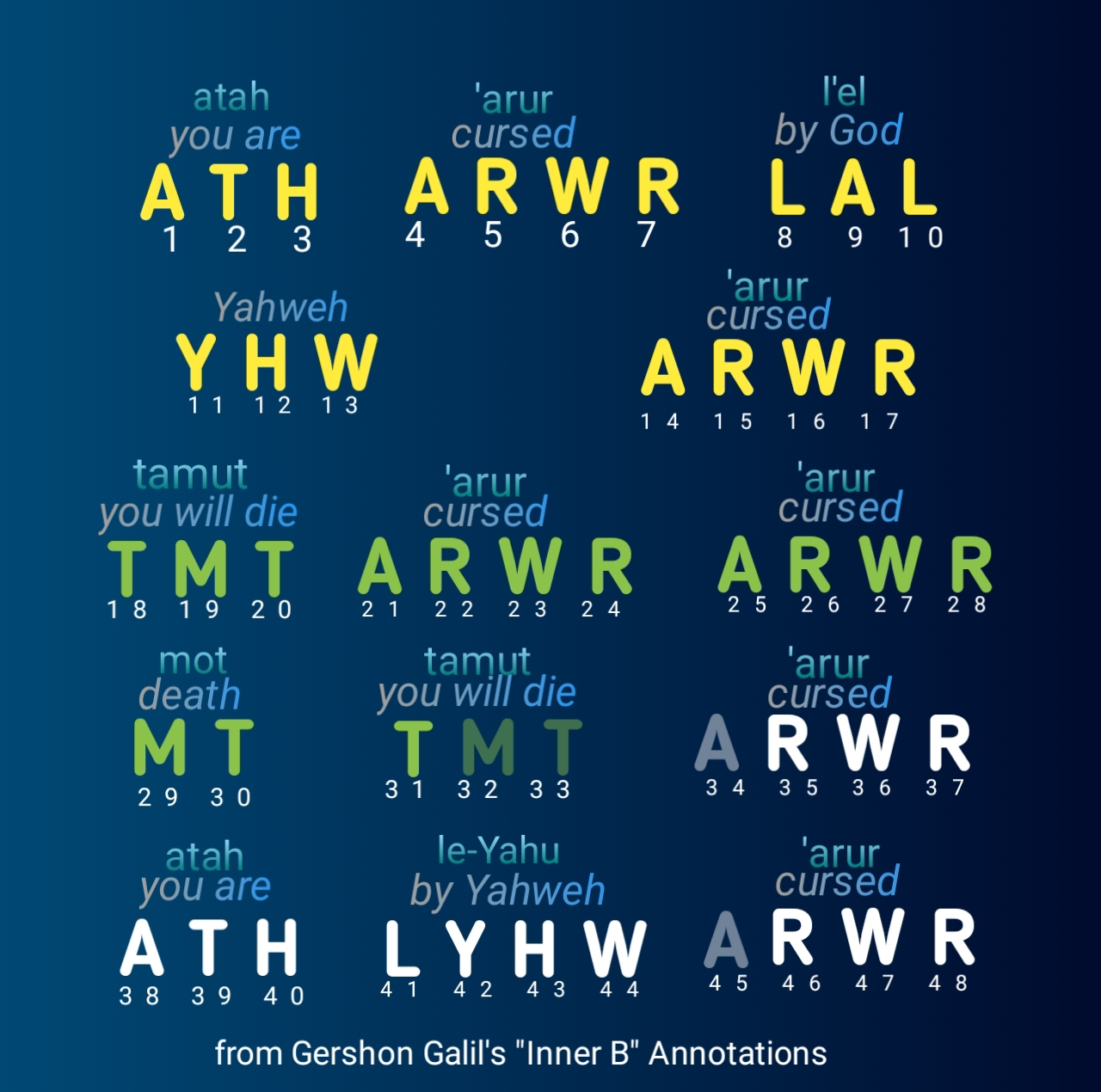
Among the Iron Age I (1200-1100 BCE) pottery used by the people who built the altar was a curse tablet. The lead tablet, probably of Moses (1308-1189 BCE), found in Mt. Ebal is inscribed with 12 words "arur" ("cursed") & with the name of the God YHW (Yahweh).

"The term arur ("cursed") appears 6 times on "Inner B" (twice in each pattern) and perhaps 6 times on "Outer A," in which case the grand total would equal 12 times." -“You are Cursed by the God YHW:” an early Hebrew inscription from Mt. Ebal. Scott Stripling, Gershon Galil, Ivana Kumpova, Jaroslav Valach, Pieter Gert van der Veen5 and Daniel Vavrik. Heritage Science (2023) 11:05, page 7
Moses of the Bible gives 12 things to be cursed. And if we will consider him as the owner or reason why the curse tablet is written, he or his inscriber lived around 1250 BCE, the time that the curse was likely written on the tablet.
"Enhanced photogrammetry and tomographic reconstruction revealed letters written in a proto-alphabetic (=Proto-Hebrew) script, likely dating to the Late Bronze Age II (ca.1400-1200 BCE), but no later than ca. 1250 BCE. The original archaeological context and analysis of the lead reinforce this date." -Stripling et al. Heritage Science (2023) 11:05, page 22
It is expected since majority (97%) of the pottery found in Joshua's altar is dated to Iron Age IA (ca. 1200-1150 BCE) and the remaining 3% is dated to Late Bronze Age IIB (ca.1250-1200 BCE). Three pieces of pottery found in Stratum 2 could be dated in Late Bronze Age IIA (ca.1400-1250 BCE).
The flint assemblage was typical of the Late Bronze Age and Iron Age I (1200 BCE).
The people of Yahweh who built the altar used that altar around 1200-1140 BCE as 95% of the 268 diagnostic pottery sherds recovered by Stripling's team is dated from the Iron Age, whereas 4.76% is of the Late Bronze Age. Frankie Snyder recovered the 2x2 cm, 0.3 cm thick folded lead tablet from the same soil derived from the altar.
By the pottery dating technique, the people of YHW who used that defixio (curse tablet) is 97% lived during the Iron Age IA (ca.1200-1150 BCE) and 3% in the Late Bronze Age IIB (ca.1250-1200 BCE), or 95% of them were people of Iron Age and more than 4% were people of the Late Bronze Age.

Biblically speaking, using lead to be inscribed by an iron pen is likely popular during the time of Job (fl. 1223 BCE). It is corroborated by the oldest known inscribed lead strip found (AD 1936) at Buyukkale in Hattusa, the Hittite capital in Turkey, and dated 1300-1200 BCE. Adding to this are lead ingots inscribed with Crypto-Minoan markings dated between around 1200 and 1100 BCE and found in the shore of Israel. With all of these pieces of evidence, inscribing on lead was available in the period between
1300 and 1100 BCE,
coincided with Moses (1309-1189 BCE) and Joshua (1248-1138 BCE).
That Joshua lived that time is reinforced by the 1250 BCE pottery sherds found beneath the rectangular altar, and the 1200 BCE plaster and pottery sherds scattered inside and around the altar. The curse tablet is likely from Stratum II, which is dated in the latter part of the Late Bronze Age IIA. The basis of this dating is the diagnostic pottery sherds made around 1250 BCE. Volcanic burner and the curse tablet could be owned by the same man who owned the 1250 BCE clay jar.
"Oh that my words were now written! oh that they were inscribed in a book! That they were graven with an iron pen and lead in the rock for ever!" -Job 19:23-24
The inscriber uses a 1350 BCE chiastic parallel similar to Ugarit Tale of Aqhat II vi 35-36 or Rameses' time (1279-1213 BCE) Genesis 9:6 chiastic parallel.
A] you are cursed by the god yahweh - cursed.
B] you will die,
C] cursed -
C'] cursed.
B'] you will surely die.
A'] cursed you are by yahweh - cursed.
And example of chiastic parallel is in Joshua 1:5-9:
A. As I was with Moses, so I will be with you; I will never leave you nor forsake you.
B. Be strong and courageous, because you will lead these people to inherit the land I swore to their ancestors to give them. Be strong and very courageous.
C. Be careful to obey all the law my servant Moses gave you; do not turn from it to the right or to the left, that you may be successful wherever you go.
D. Keep this Book of the Law always on your lips;
D. Meditate on it day and night,
C. So that you may be careful to do everything written in it. Then you will be prosperous and successful.
B. Have I not commanded you? Be strong and courageous. Do not be afraid; do not be discouraged,
A. For the Lord your God will be with you wherever you go.
Thus, making chiasmus is not unknown for Moses and Joshua.
And one of the targets of curse is let man fear God YHWH.
"Moreover all these curses shall come upon you, and shall pursue you, and overtake you, till you be destroyed; because you hearken not unto the voice of YHWH your God, to keep His commandments and statutes which He commanded you:
If you will not observe to do all the words of this law that are written in this book, that you may fear this glorious and fearful name,
YHWH eloheka
[THE LORD THY GOD]" -Deuteronomy 28:45,58
It was Moses who asked Israelite priest to write curses in a book.
"And the priest shall write these curses in a book, and he shall blot them out with the bitter water" -Numbers 5:23
There is only one God identified as the Israelite God, and curse would be to those who will replace YHWH with the other unknown gods.
"And a curse, if ye will not obey the commandments of YHWH your God, but turn aside out of the way which I command you this day, to go after other gods, which ye have not known.
And it shall come to pass, when YHWH your God has brought you in unto the land whither you go to possess it, that you shall put the blessing upon mount Gerizim, and the curse upon mount Ebal." -Deuteronomy 11:28-29
This biblical report is confirmed by a curse tablet recovered by Frankie Snyder in 2019 when Scott Stripling's archaeological team wet sifted the discarded material left by prof. Zertal's dig in the east and west dumps of Joshua's altar.
The inscription says:
"Atah (You are)
Arur (cursed)
L'el YHW (by [the] God Yahweh) -
Arur (cursed).
Tamut (you will die)
Arur (cursed).
Arur (cursed) -
Mot (death)
T(mt) (you will die)
(A)rur (cursed)
Atah (you are)
Le-YHW (by Yahweh) -
Arur (cursed)."
The name "YHW" (Yau) is what the Northern Israel (Samaria) rendered name of God which is "Yahu" in Southern Israel (Judah). The first historical person to mention it as part of a toponym is king Amenhotep III in circa 1380 BCE, and king Rameses II (1279-1213) gave clues where to locate the "Land of YWH (Yahweh)" when he recorded other places - including Seir, Libnah, and Phunon - near it, and Ramesses III (1186-1155 BCE) described its exact whereabouts toward the south of Athar (the biblical Atharim) which is south of Arad, that is, in Makhtesh Ramon.

Rameses II was proud to announce that he had encountered the people of the Land of Yahweh which he identified to be belonged to Shasu race. His son, Merneptah (1206 BCE), knew that tribes of Edom were Shasu, whereas Ramesses III reported that Seirites were clans of Shasu, suggesting that Seirites (who during the reign of the latter pharaoh became followers of Yar-su/Moses) were relatives of Edomites, the relatives of Israel. Moses positively claimed that several myriads Kodesh of Seir were converted to the faith of YHWH. After the death of Yar-su (Moses) and then Joshua left Negeb for Canaan, king Ramesses III (1186-1155 BCE) destroyed the tents of Seirites, giving us insight when Joshua had entered the area of Mt. Ebal, where they performed the task that Moses had given them to do: uttering curses on Mt. Ebal.
The curse tablet proves that the people who built the Joshua's altar and lived between 1250 & 1140 BCE were adherents of God, whose name is YHW.
That name "YHW" was archaeologically known between 1380 and 1200 BCE, which corresponds to the dating 1400-1200 BCE given by archaeologists for the curse tablet.

The letter yod "Y" in the inscription according to the disvoverers, particularly the one which has sturdy F-shaped form, "seems to have had a long duration and as such can still be found on the Qubur el-Walayda bowl from the late thirteenth century BCE" or 1200 BCE.

Why it could be dated around 1200 BCE?
In the said paper published by Scott Stripling et al. in Heritage Science in 2023, it is implicated that the rectangular altar is dated in Iron Age IA (1200-1150 BCE), whereas the round shrine beneath it in Late Bronze Age IIB (1250-1200 BCE), hereby making the curse tablet to be dated around 1250 BCE as they claimed it to be derived from round shrine/altar:
"Since Zertal determined that the fill of the Stratum IB altar belonged to Stratum II, the defixio clearly dates to the period of the Stratum II round altar."
"From 1982 to 1989, Adam Zertal excavated what he interpreted as two altars at el-Burnat (A) on Mt. Ebal’s second step on the eastern side. The smaller Late Bronze Age II altar lay directly beneath the larger Iron Age I altar. The biblical tradition (Joshua 8:30) records that Joshua, Israel’s early leader, built an altar on Mt. Ebal as part of a covenant renewal ceremony soon after the Israelites returned from Egypt to Canaan. Thus, it is possible that Zertal’s findings relate to this verse."
He conducted the scientific studies on behalf of the University of Haifa under the auspices of the Israel Antiquities Authority when he was surveying the Manasseh Hill Country l (1978–1992), particularly at el-Burnat (A) on Mt. Ebal, northeast of Tel Balata where the ruins of ancient Shechem lie.
"He exposed a large rectangular altar constructed in the late thirteenth century BCE (ca. 1225 BCE) which rested atop and protected an earlier round altar, which he dated to the mid thirteenth century (ca. 1250 BCE). The altars lie within a 3.8 dunam foot-shaped enclosure, which measures 110 m long and has an average width of 35 m. This enclosure is itself encased by a larger foot-shaped enclosure covering 14 dunams. The outer dimensions of the rectangular altar from Stratum 1 measured 8.75–9.00×7.00 m in addition to a ramp on the west side; the round altar from Stratum 2 measured 2 m in diameter. The round altar lies beneath the perfect geometric center of the rectangular altar. Zertal focused his excavation on the inside and outside of the altars (Area A) and on a structure to their north (Area B) which he identifed as a four-room house. The overwhelming majority (97%) of the pottery dated to Iron Age IA (ca. 1200–1150 BCE), and the rest (3%) dated to the Late Bronze Age IIB (ca. 1250–1200 BCE)."
Scott Stripling's team confirmed these latter pottery datings when they published that in their 2019 project they "yielded 268 diagnostic pottery sherds (95% Iron Age I, 4.75% Late Bronze Age, and 0.25% Early Roman), 75 diagnostic fints, and 79 small objects. Among the objects was the folded lead tablet, which staff member Frankie Snyder recovered."
"In Galil’s opinion the inscription dates to the end of the thirteenth century BCE—close to the date of the Mernephtah Stele (ca. 1208 BCE), but the other authors believe it could be older."

There is another good reason for Gershon Galil to epigraphically date the inscription around 1200 BCE, because the people who built the rectangular altar built it around 1200 BCE before 1150 BCE, and this dating's accuracy is between 97 and 95%. The 4% or 3% presence of 1300 or 1250 BCE pottery sherds suggests that the clay jars were owned by few older men who lived around 1300 BCE. This also answers why the engraver who wrote the inscription on the lead tablet uses Late Bronze Age II (1400-1200 BCE) and Iron Age alphabetic characters.